
Marine diatoms efficiently

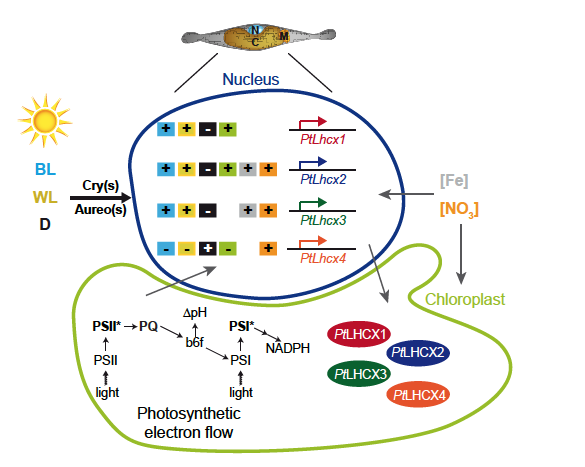
The team of Diatom Functional Genomics just published a paper describing how marine diatoms efficiently attune acclimation responses in highly variable ocean environments. L.Taddei*, G.R. Stella*, A. Rogato, B. Bailleul, A.E. Fortunato, R. Annunziata, R. Sanges, M. Thaler, B. Lepetit, J. Lavaud, M. Jaubert, G. Finazzi, J.P. Bouly, A. Falciatore. Multi-signal control of expression of the LHCX protein family in marine diatom Phaeodactylum tricornutum.  Journal Experimental Botany, in press.*co-first-authors

0 Comments

Complete reconstruction of genome history

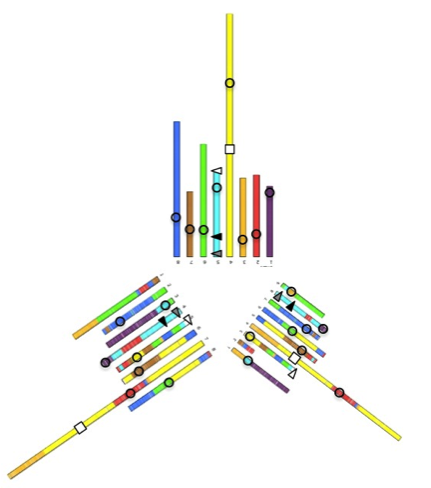
We achieved the complete reconstruction of genome history in a model yeast genus, providing a granular view of genome evolution linking gene content, chromosome rearrangements and protein divergence into a single evolutionary framework.N Vakirlis, Sarilar V, G Drillon, A Fleiss, N Agier, J-P Meyniel, L Blanpain, A Carbone, H Devillers, K Dubois, A Gillet-Markowska, S Graziani, Nguyen H-V, M Poirel, C Reisser, J Schott, J Schacherer, I Lafontaine, B Llorente, C Neuvéglise and Fischer G. Reconstruction of ancestral chromosome architecture and gene repertoire reveals principles of genome evolution in a model yeast genus. Genome Research (2016).

0 Comments

Diatom Phytochromes

A.E. Fortunato, M. Jaubert, J.P. Bouly, M. Thaler and A. Falciatore from the Diatom Functional Genomics team in collaboration with J.S. Bernardes (Statistical Genomics and Biological Physics), A. Carbone (Analytical Genomics) and other international collaborators published on The Plant Cell the paper “Diatom Phytochromes Reveal the Existence of Far-Red-Light-Based Sensing in the Ocean.”  Full text paper.Plant Cell Editor’s comment on this work.

0 Comments

The resistance of pathogenic microbes

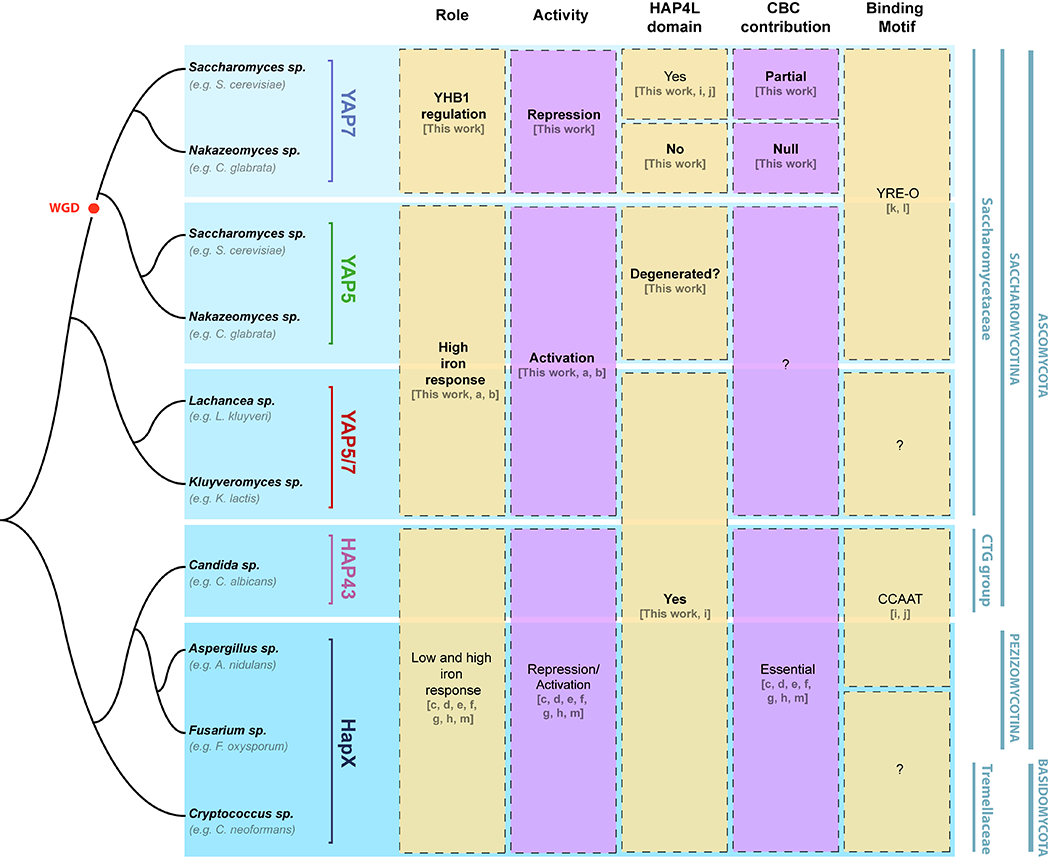
Nitric oxyde oxydases are enzymes which contributes to the resistance of pathogenic microbes to the innate immune system by detoxifying nitric oxide. "The genetic networks" team identified a new regulator of the expression of nitric oxydases in fungi and deciphered its functioning and evolution in different pathogenic and non-pathogenic yeast species. http://www.ncbi.nlm.nih.gov/pubmed/25732006

0 Comments

Ulysses

A. Gillet-Markowska, H. Richard, G. Fischer & I. Lafontaine just published a new tool - Ulysses - providing an accurate detection of low-frequency structural variations in large insert-size sequencing libraries. Ulysses is a valuable tool for the characterization of somatic mosaicism in human tissues and in cancer genomes.Ulysses: accurate detection of low-frequency structural variations in large insert-size sequencing librariesBioinformatics 2014; doi: 10.1093/bioinformatics/btu730

0 Comments

Saccharomyces species

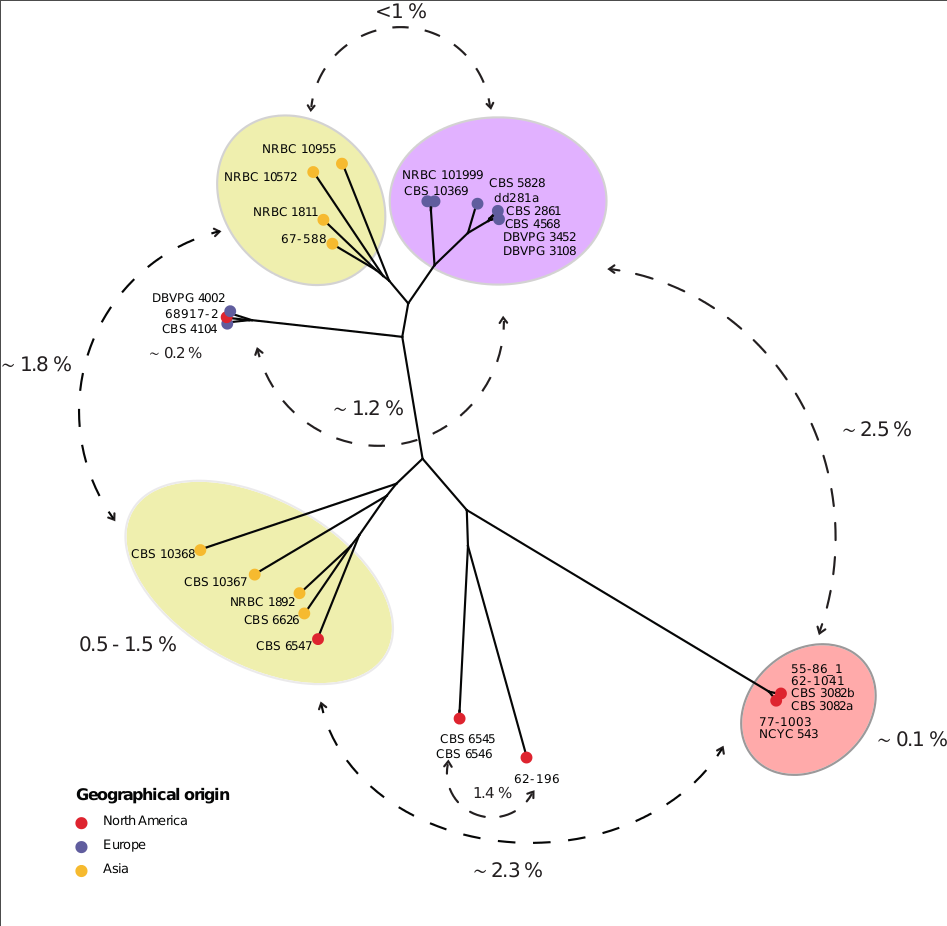
The "Biology of Genomes" team and the "Intraspecific Variation and Genome Evolution" team from the Université de Strasbourg have published the first population genomics survey in a yeast different form a Saccharomyces species. This study reveals that consequently to a large-scale introgression event, two different mutational regimes can coexist within the same genome.

0 Comments

The first eukaryotic synthetic chromosome

The Biology of Genomes team participated to the complete design and synthesis of the first eukaryotic synthetic chromosome. We compared replication dynamics of synthetic and native chromosome III and saw few dramatic changes in spite of several autonomously replicating sequences having been deleted.Total Synthesis of a Functional Designer Eukaryotic Chromosome. Annaluru, Muller et al., Science (2014) DOI:10.1126/science.1249252

0 Comments