
genome assemblies

Marco Cosentino-Lagomarsino and Gilles Fischer collaborated with Gianni Liti’s team to generatate end-to-end genome assemblies for 12 yeast genomes based on long-read sequencing. These population-level high-quality genomes with comprehensive annotation enable the first explicit definition of chromosomal boundaries between core and subtelomeric regions as well as a precise quantification of their relative evolutionary rates of genome dynamics.To the article

0 Comments

Evolutionary genomics of the cold-adapted diatom Fragilariopsis cylindrus

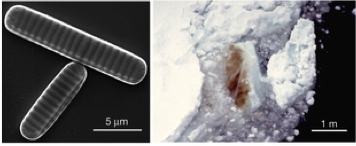
The Diatom Functional Genomics Team (Angela Falciatore and Antonio E. Fortunato) contributed to the manuscript “Evolutionary genomics of the cold-adapted diatom Fragilariopsis cylindrus”,  published on Nature in January 2017. This study, coordinated by Prof. Thomas Mock, University of East Anglia, Norwich, has revealed the existence of highly diverged alleles in the genome of this polar diatom species that may be involved in adaptation to environmental fluctuations in the Southern Ocean.To the Article

0 Comments

Tma108

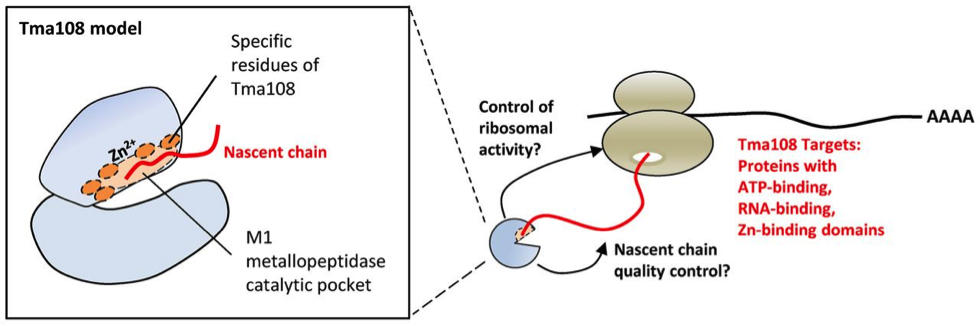
A new publication of F. Devaux Team in NAR:The discovery of novel specific ribosome-associated factors challenges the assumption that translation relies on standardized molecular machinery. In this work, we demonstrate that Tma108, an uncharacterized translation machinery-associated factor in yeast, is a specific nascent-chain associated factor selectively recruited during the translation of less than 200 mRNAs encoding proteins with ATP or Zinc binding domains. Tma108 is a unique example of a nascent chain-associated factor with high selectivity and its study illustrates the existence of other specific translation-associated factors besides RNA binding proteins.To the article

0 Comments

Transcriptional regulatory networks

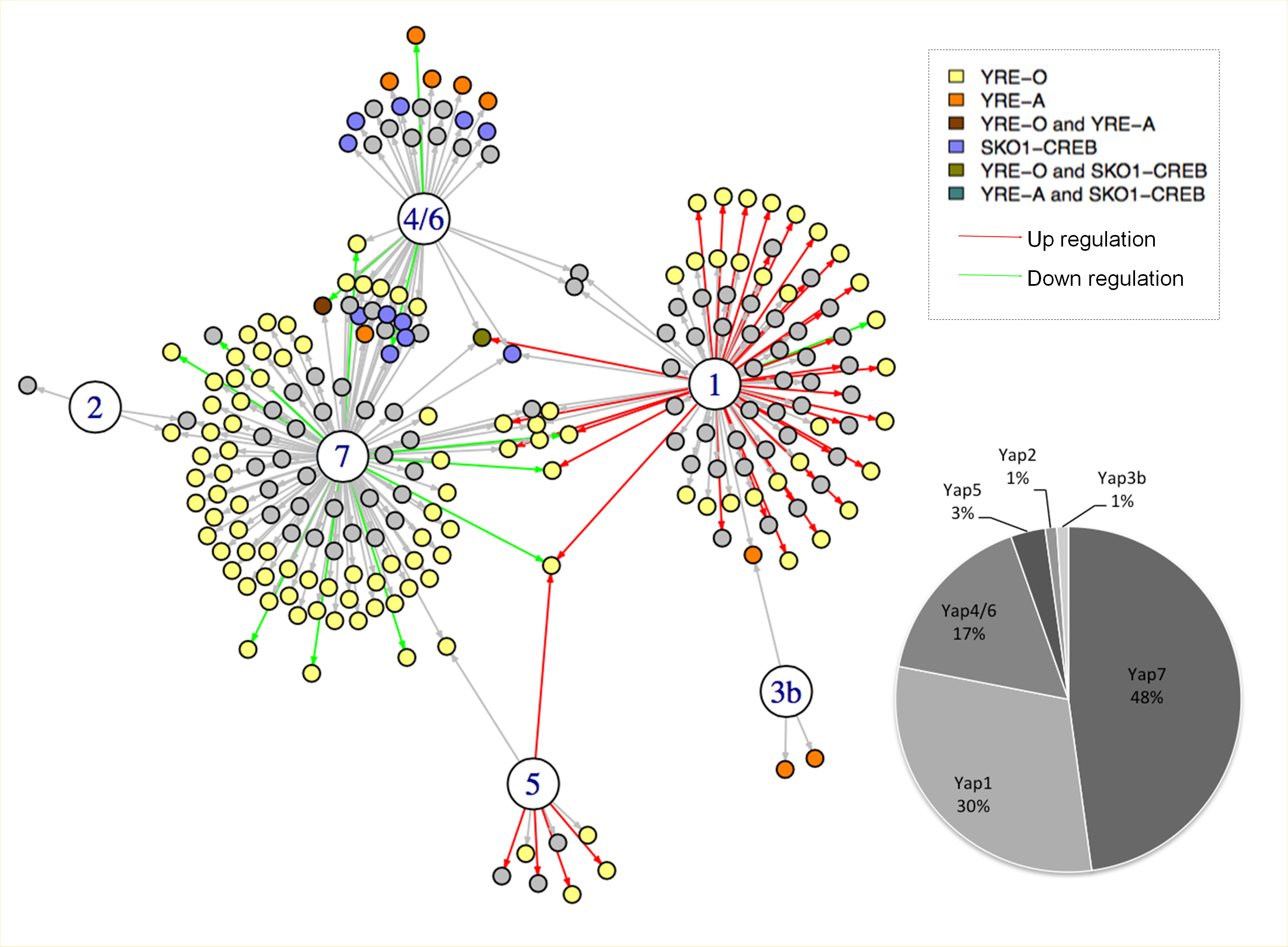
F. Devaux's team published one of the first ChIP-seq-based description of the transcriptional regulatory networks in the pathogenic yeast Candida glabrata. This work, which was performed in collaboration with J-M. Camadro and G. Lelandais from the Jacques Monod Institute and with the NGS platform directed by S. Le Crom, is the first publication from a larger ANR project aiming at a comprehensive description of stress response regulatory networks in this emerging human pathogen.

0 Comments

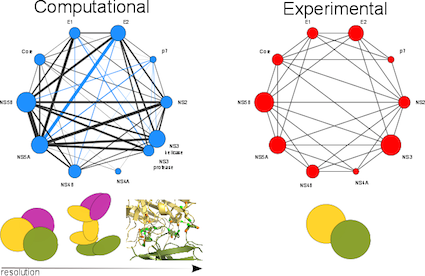
Computational approach

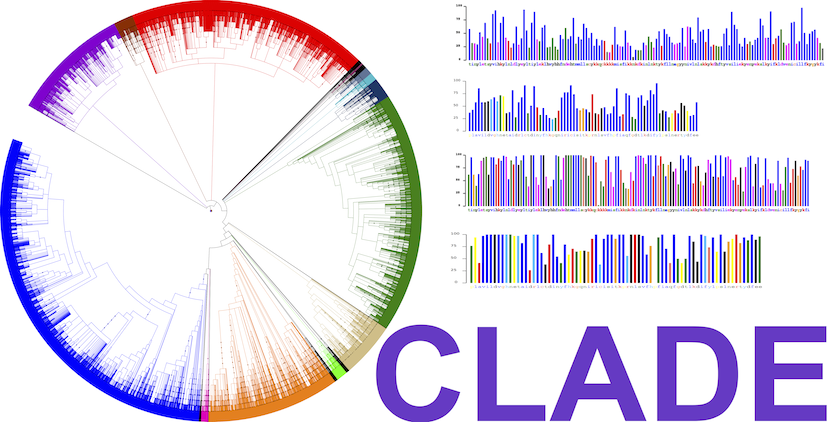
A novel computational approach of coevolution analysis allowed us to reconstruct the protein-protein interaction network of the Hepatitis C Virus at the residue resolution. For the first time, coevolution analysis of an entire viral genome was realized. Champeimont R, Laine E, Hu S-W, Penin F, Carbone A. Coevolution analysis of Hepatitis C virus genome to identify the structural and functional dependency network of viral proteins. Scientific Reports.

0 Comments