
CIPS

F.Nadalin and A.Carbone published CIPS, a new computational method for scoring protein docking decoys based on a combination of residue-residue contact preferences and interface compositional bias. CIPS outperforms state-of-the-art methods on screening protein-protein docking models and improves the ranking on 28 CAPRI targets. The drastic reduction of candidate solutions produced by thousands of proteins docked against each other makes large-scale docking accessible to analysis.To the SoftwareTo the Article

0 Comments

 A striking quantitative invariant

Eleonora De Lazzari* published her findings on scaling laws for gene families. A striking quantitative invariant in evolutionary genomics is the scaling with genome size of the number of proteins sharing a specific function. E.D.L. showed that such scaling laws exist systematically at the level of single evolutionary families. This provides a novel view of the links between evolutionary expansion of protein families and gene functions.This work was performed in collaboration with J Grilli (U. Chicago) and S Maslov (U. Illinois).

0 Comments

 Formal methods in the eyes of biological data

Elodie Laine and Alessandra Carbone organize the mini-symposium « Formal methods in the eyes of biological data » the 5th of June in Ronce-les-Bains. The symposium will highlight recent mathematical developments toward elucidating biological questions or modeling complex biological systems. It will illustrate the cross-talk between formal methods and biological data. The symposium is hosted by the SMAI congress (http://smai.emath.fr/smai2017/) and sponsored by the GDR BIM (http://www.gdr-bim.cnrs.fr/).

0 Comments

BIS2Analyzer

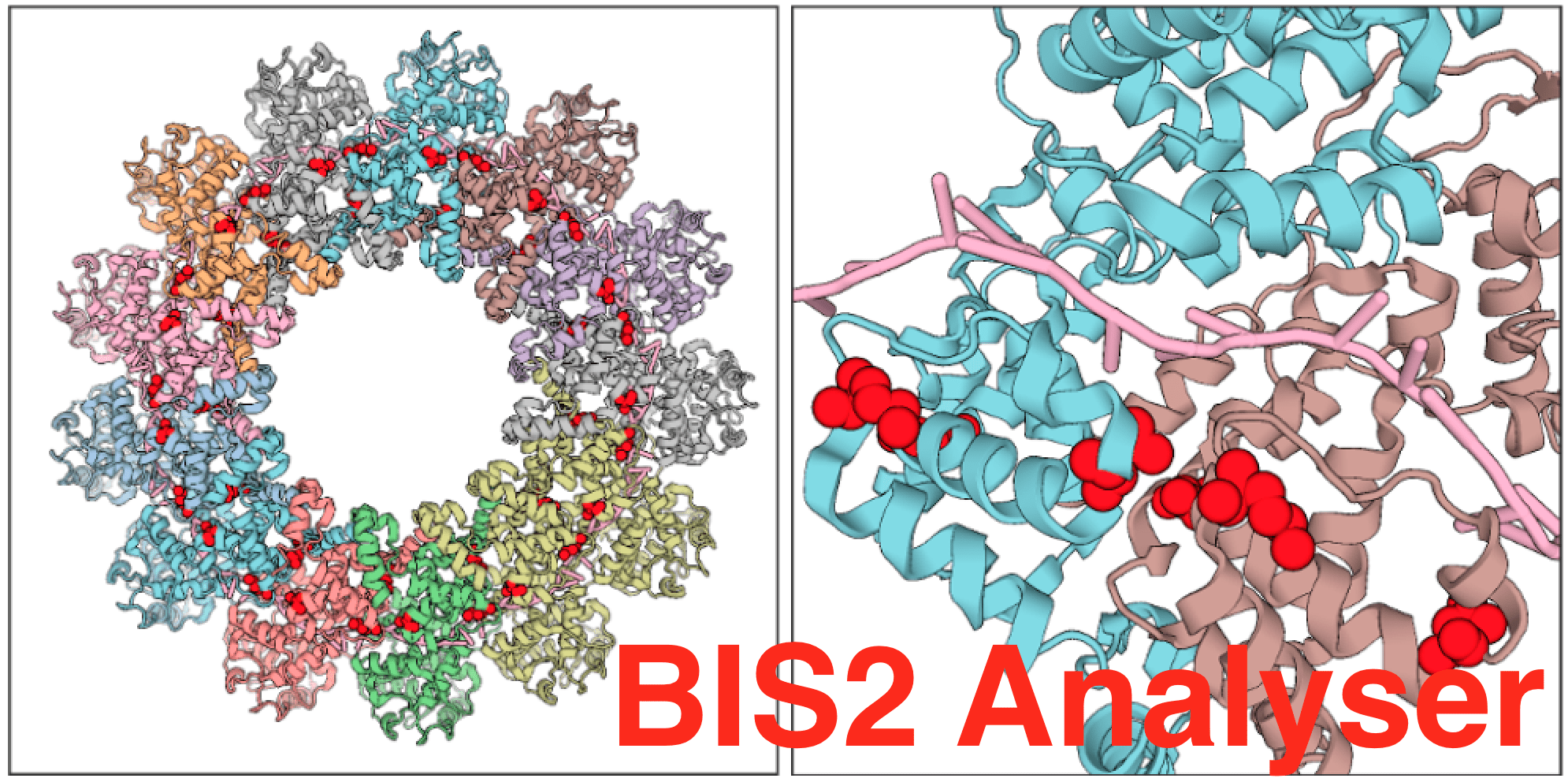
BIS2Analyzer is a webserver providing the online analysis of coevolving amino-acid pairs in protein alignments, especially designed for vertebrate and viral protein families, which typically display a small number of highly similar sequences.

Comments Off on BIS2Analyzer

Plasmobase

Plasmobase is a unique database designed for the comparative study of 11 Plasmodium genomes. Plasmobase proposes new domain architectures as well as new domain families that have never been reported before for these genomes.It allows for an easy comparison among architectures within Plasmodium species and with other species, described in UniProt. Joint work of J.Bernardes and A.Carbone.

0 Comments